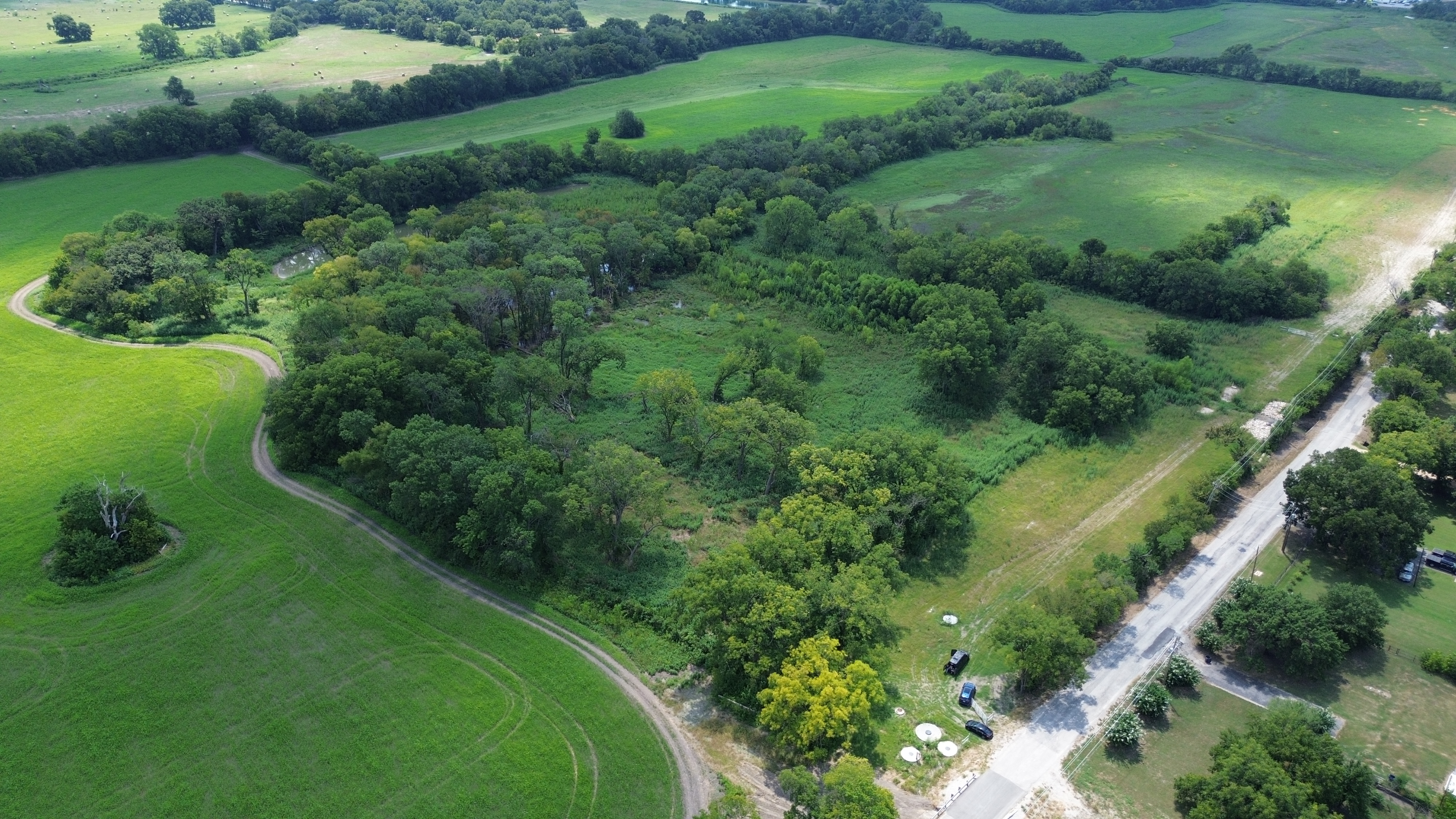
Site overview · west approach
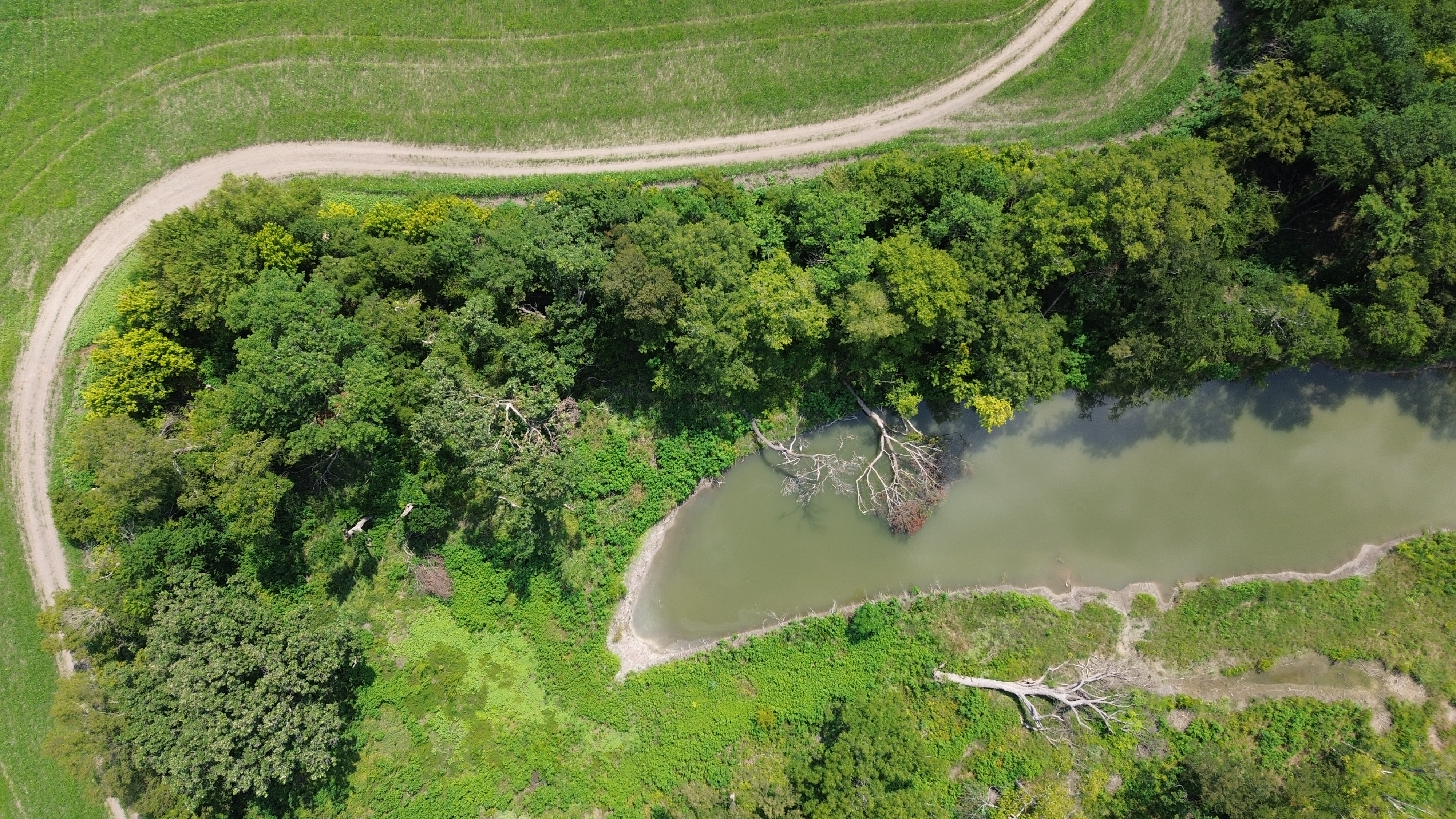
Seventeen acres off Woodlawn Road, folded around a 2.5-acre oxbow of the East Fork Trinity. A working parcel at the edge of McKinney where a modern integrated farm can live on land that already knows how to hold water, shade, and life.
The parcel at 2602 Woodlawn Road sits at the hinge between agricultural Collin County and the expanding footprint of McKinney. Pasture and row crop to the north, the East Fork Trinity River corridor to the south, and a natural oxbow pond folded into the middle of the property.
Of 17.38 total acres, 5.5 sit on higher ground suitable for production. The remaining acreage stays intact: mature canopy, riparian edge, and the pond itself serve as the biological buffer for the whole system. Nothing about the land is asked to change — the farm is asked to fit it.
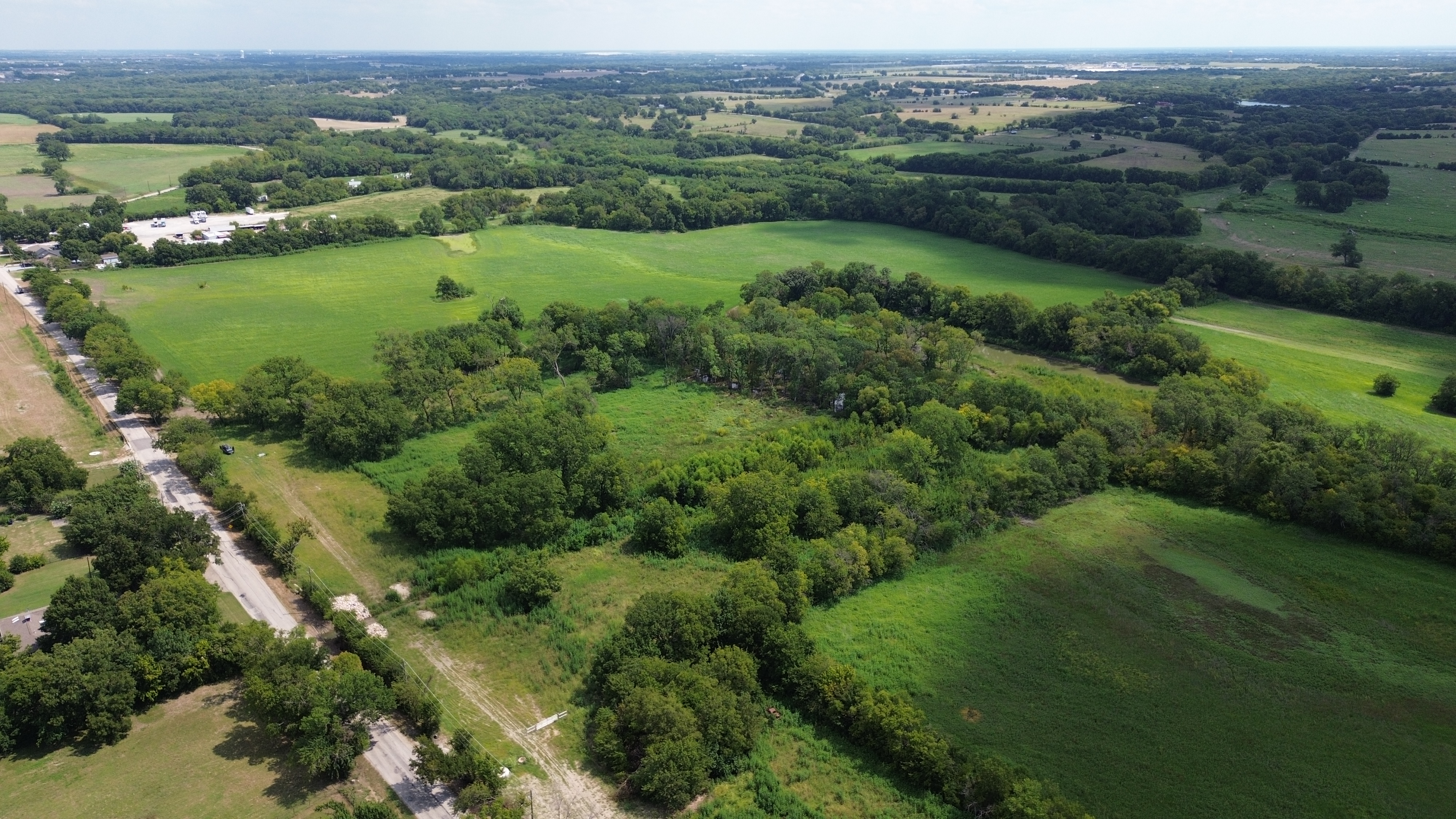
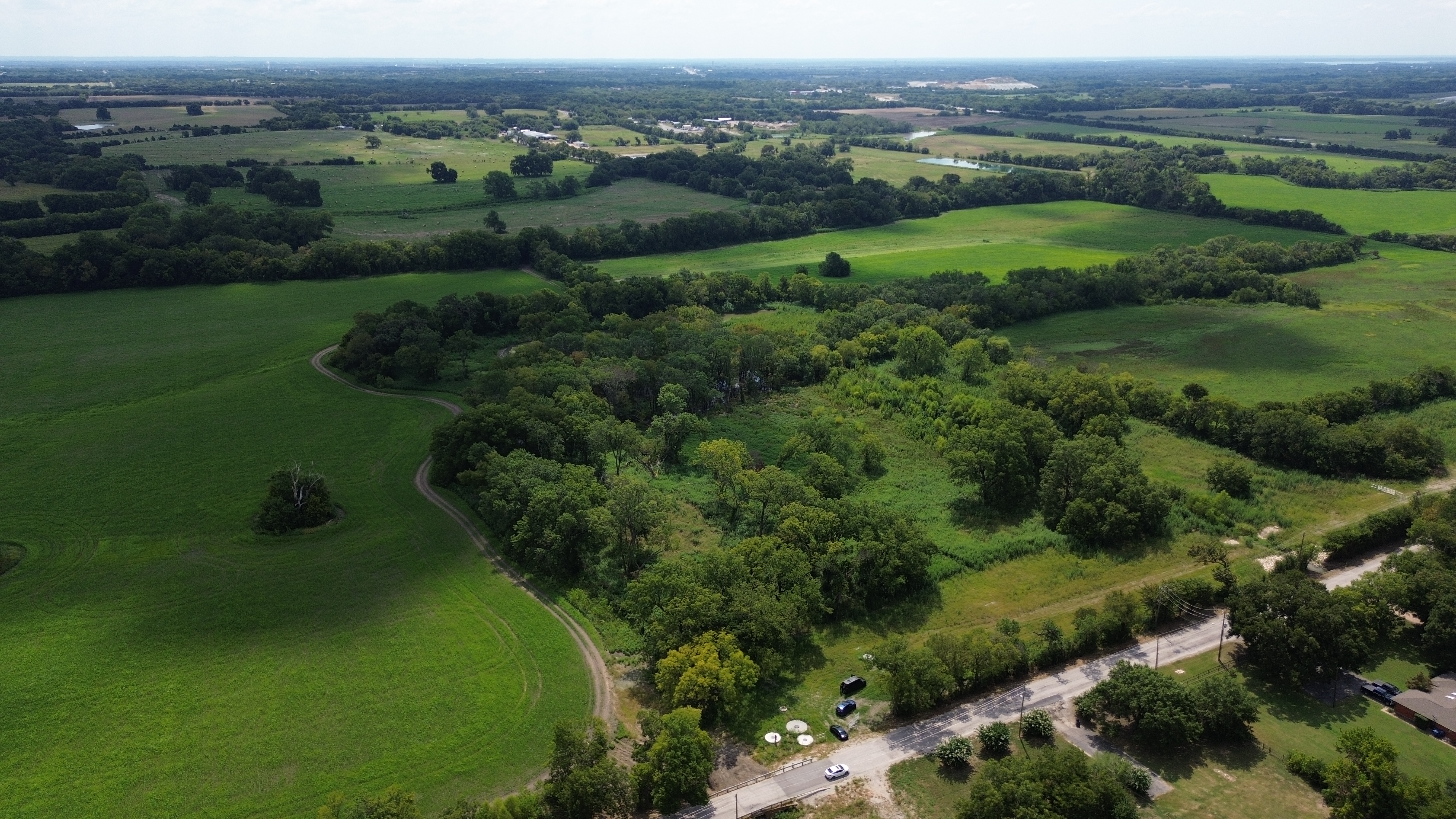
Not a factory on top of the field. A farm shaped by the pond, the canopy, and the seasonal rhythms that have been running on this parcel for longer than any deed. The vision is a modern VAC — Vườn · Ao · Chuồng, garden · pond · coop — built as one living, closed-loop organism.
The oxbow is not amenity — it is the biological reactor everything else plugs into. Built components sit downstream of its microbiology. Site decisions begin with water and work outward.
Sensors and inference replace constant human presence. The land keeps its rhythms. The operator gains a quiet, continuous view into them — and the ability to ask the system, in plain language, what is going on.
Fish feed the greens. Greens feed the table. Birds feed the soil. Every intervention is logged; every outcome feeds back. What the land grows, the land keeps — and what the system learns, the system remembers.
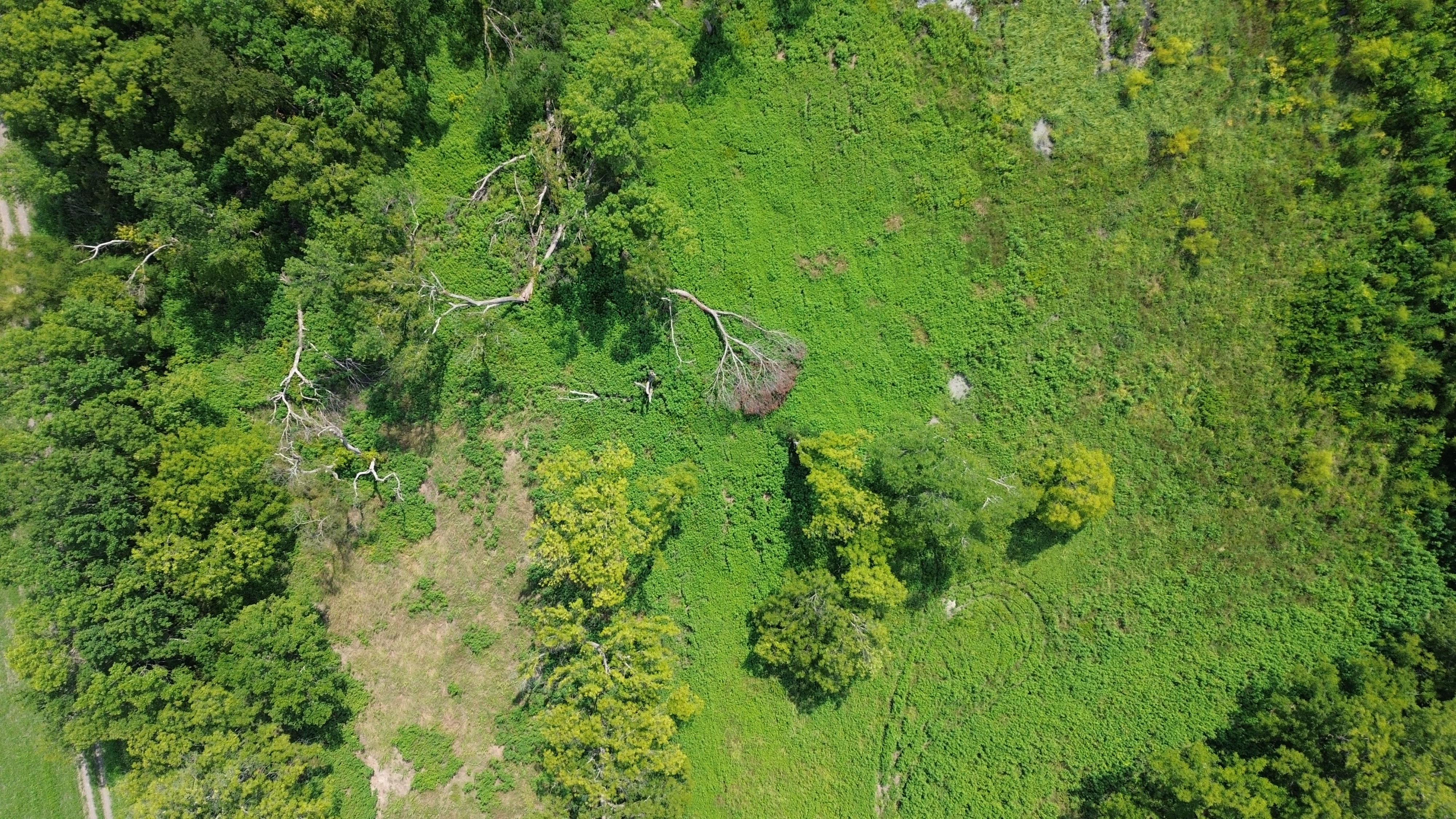
The oxbow is a natural meander cut off from the East Fork Trinity. Fed by the riparian water table, shaded by old canopy, and seeded with decades of native microbiology — the kind of water you cannot build.
Pond water seeds the aquaculture biofilter. Native microorganisms accelerate system cycling by weeks and displace a meaningful share of the chemical mineral inputs otherwise required.
When tank chemistry drifts, partial water exchange with the pond stabilizes ammonia and pH without discarding treated water — trading restart risk for quiet self-correction.
Composted manure tea returns to the pond margins — nitrogen back into the native water body. The loop closes at the place it started. Zero synthetic discharge off the parcel.
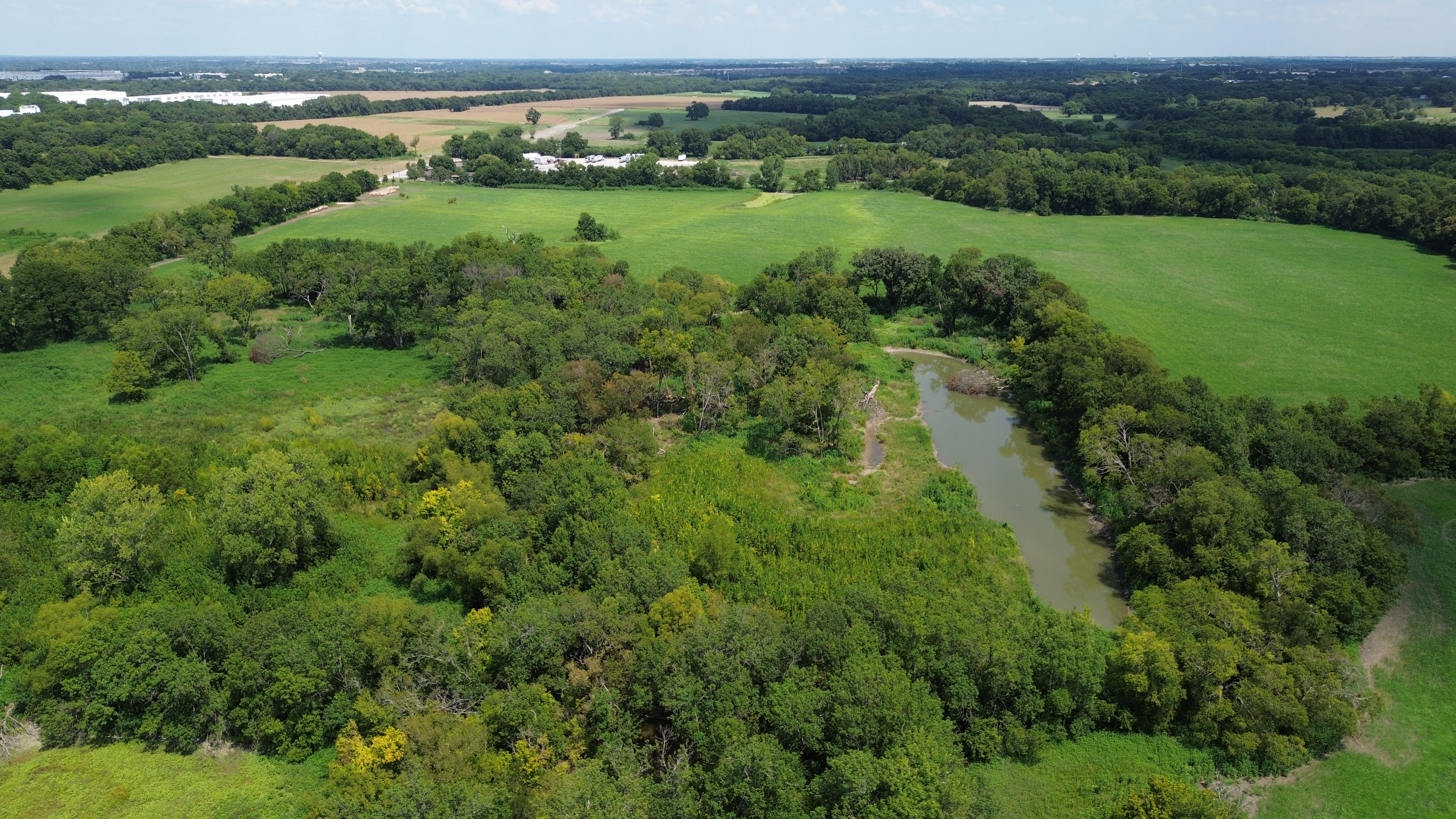
Vườn · Ao · Chuồng — the Vietnamese integrated-farming tradition rebuilt with modern controlled-environment agriculture. Three production components share water, nutrients, and waste as one closed loop. This is the fundamental principle of the farm — every sensor, every model, every delivery lives downstream of it.
Replace the full-time on-site biologist with a dense IoT sensor network feeding a real-time AI inference layer. Sensors read every thirty seconds. Edge devices apply local control rules instantly. Cloud models detect drift hours before critical thresholds. LLM agents translate sensor data into natural-language root-cause hypotheses. A farm queried the way a network operations center queries its telecom stack.
Water chemistry, fish behavior, and canopy growth arrive as live data streams. The land keeps its rhythms — the operator gains a window into them.
The knowledge base is the farm's operating system — abstracting biological complexity the way a network OS abstracts hardware from an application.
The architecture is modular. Every layer is buildable at pilot footprint and extensible from there. Small, instrumented, and alive.
Atlas Scientific pH, dissolved oxygen, electrical conductivity, and ORP probes. Ultrasonic water level. IP cameras on fish behavior and canopy imaging. Temp and humidity. Dual-redundancy on every life-critical channel. ESP32 nodes transmit via MQTT with battery backup at each node.
Raspberry Pi 5 running Mosquitto + Python actuator scripts. Sub-second response to critical events, hardware-capped dosing, 72-hour local buffer. The system degrades gracefully; the land does not.
AWS IoT Core → InfluxDB Cloud → Grafana. Raw 30-second data kept at fidelity; rolled into aggregates; daily summaries retained indefinitely. Every reading carries tank, sensor, and crop-batch identity. A system whose history can be asked questions.
A random-forest fish-health classifier on rolling water chemistry. An LSTM anomaly detector that flags systematic deviation hours before threshold. YOLOv8 canopy vision estimating days-to-harvest. Feed optimization tied to fish activity and oxygen draw. Every model retrained on this farm's own data.
Claude API with function calling, wired into the sensor pipeline. The operator asks in plain language; the system retrieves 48 hours of sensor history plus the most relevant passages from the RAG knowledge base, and returns a grounded root-cause hypothesis with a recommended action. A daily operations summary at dawn.
The knowledge base compounds in three layers. Live operational data grounds it in this parcel's own behavior. Curated science and regulation keep it honest. A structured log of every intervention and its outcome turns the system from static reference into something that actively improves.
Every sensor reading, every anomaly, every corrective action, every harvest outcome — permanently logged and queryable. A dataset that can only come from this facility, training every subsequent model on ground truth from this specific pond and this specific canopy.
Peer-reviewed aquaponics literature, Atlas Scientific application notes, USDA organic guidelines, FDA Produce Safety documentation, FEMA floodplain guidance — chunked, embedded, retrieved alongside live state. Responses grounded in both real-time system and authoritative science.
A structured record of every intervention and what followed. Over time, a ground-truth dataset of what actually works on this parcel — which alerts were false positives, which varieties underperformed the model, which corrections held. The base stops being static and starts learning.
Integrated VAC (vegetable–aquaculture–chicken) farming and pond-based polyculture are the subject of a working peer-reviewed literature, and commercial aquaponics is now a three-decade industry with operators producing food year-round in climates far harder than North Texas. Woodlawn's architecture rests on that base — not on novelty.
Founded in 1984 and relocated to Wisconsin in the mid-2000s, Nelson & Pade operate a 14,000-square-foot controlled-environment aquaponics greenhouse that produces 1,000 heads of lettuce and 100 pounds of fish every week, year-round, alongside tomatoes, herbs, kohlrabi, and radishes. Their facility also houses the University of Wisconsin–Stevens Point Aquaponics Innovation Center, a formal academic–industry research partnership in operation since 2014. Their patented Clear Flow Aquaponic Systems are deployed in roughly 35–40 countries and have been recognized three times as Sustainable Product of the Year by the Wisconsin Sustainable Business Council.
The relevance is simple: a closed-loop aquaponic facility producing a thousand retail-grade lettuce heads a week is not a thought experiment. It has been running, under independent academic observation, for over a decade. Woodlawn's VAC is a smaller, outdoor, pond-coupled variant of the same fundamental principle.
Frames VAC as an integrated food-production system where fishpond, vegetable plots, and poultry cycle nutrients through each other — the same loop logic Woodlawn inherits.
Documents the economics and resource efficiency of pond-centered integrated farms at smallholder scale — the operational precedent for a single-pond, single-parcel loop like Woodlawn's.
Consolidates the evidence for aquaponics as a sustainable production mode: closed-loop water use, stacked yields, and the component ratios that commercial operators like Nelson & Pade have since validated at scale.
Additional sources in the knowledge base: Atlas Scientific probe application notes, USDA National Organic Program standards, FDA Produce Safety Rule guidance, FEMA floodplain management documentation. Every citation is embedded into the RAG layer so operational answers can be grounded in the source.
Edge control, cloud inference, and language interfaces compress the operating team while expanding what a single farm can safely know about itself.
Practices stop being inherited and start being measured. Every model is retrained on this farm, this pond, this climate — not someone else's benchmark.
The point of the intelligence layer is not more volume. It is knowing, in language, why the system is doing what it is doing — and when to leave it alone.
The sensor mesh, the knowledge base, the LLM interface — these are the transferable assets. Woodlawn is the first instance of an architecture meant to travel.
2602 Woodlawn Holdings was formed for one purpose: to steward this parcel and operate a living farm on it. The canopy stays. The pond stays. The road stays. What changes is what the land is asked to do — quietly, year-round, in place.